

Crossware vs Opensense: Comparing Email Signature Solutions
Opensense offers an easy-to-use platform to manage your company email signatures, email ad campaigns, sales tracking, and compliance.

What's the difference?
See how Opensense stacks up in features in comparison to

Openense helps marketing, sales, and IT teams unlock the power of employee email to drive revenue, build brand, and strengthen security and compliance across every message.


Microsoft 365, Exchange & HCL Domino.



What's the difference?
See how Opensense stacks up in features in comparison to
Openense helps marketing, sales, and IT teams unlock the power of employee email to drive revenue, build brand, and strengthen security and compliance across every message.
Microsoft 365, Exchange & HCL Domino.
Overview of Crossware
Crossware is a New Zealand-based email signature management company that has been operating since 2002, with its dedicated email signature solution launching around 2013. Headquartered in Auckland, Crossware built its product around the Microsoft ecosystem, supporting Microsoft 365, Exchange Server, and HCL Domino (formerly IBM Notes). The company has carved out a strong presence in the Asia-Pacific region and serves organizations that run exclusively on Microsoft infrastructure.
Crossware handles the fundamentals of email signature management well within its supported platforms. It offers centralized template management, Active Directory synchronization, and rule-based signature assignment for Microsoft environments. For organizations that operate entirely within the Microsoft and HCL ecosystems and need straightforward signature standardization without advanced marketing capabilities, Crossware provides a focused solution backed by over two decades of experience in the space.
Key Differences Between Crossware and Opensense
Platform Support
The most significant difference between Crossware and Opensense is platform coverage. Crossware supports Microsoft 365, Exchange, and HCL Domino, but does not support Google Workspace at all. This means organizations using Gmail or running a mixed Microsoft and Google environment cannot use Crossware to manage signatures across their entire workforce. Opensense was built from the ground up as a cross-platform solution, offering native support for both Microsoft 365 and Google Workspace with equal depth. For companies that use Google Workspace or anticipate a migration between email platforms, Opensense eliminates the risk of being locked into a single ecosystem.
Deployment and Device Coverage
Crossware's deployment model is tied closely to Microsoft transport rules and Exchange connectors. While this works reliably within Microsoft-only environments, it limits flexibility in more complex routing scenarios. Opensense uses server-side signature injection that operates independently of mail transport rules, ensuring consistent rendering across every email client and device, including iPhone Mail, Android Mail, Apple Mail, and mobile Outlook. Opensense signatures appear correctly whether the email is sent from a desktop, forwarded through a shared mailbox, or read on a mobile device.
Marketing and CRM Integration
Crossware is primarily an IT administration tool for standardizing email signatures. It offers banner ad capabilities but lacks the deep CRM and marketing integrations that modern revenue teams require. Opensense integrates natively with Salesforce and HubSpot, enabling marketing teams to run targeted email signature management campaigns based on CRM data. This includes ABM targeting, banner A/B testing, audience segmentation, and the ability to personalize signature content based on deal stage, industry, or account attributes, all without requiring IT involvement for each campaign change.
Analytics and Compliance
Crossware provides basic deployment reporting, but Opensense goes significantly further with engagement analytics, buyer intent signals, multi-recipient tracking, and video replay analytics. Every email your team sends becomes a measurable marketing touchpoint. On the compliance side, Opensense holds SOC 2 certification across all five trust principles and supports Microsoft GCC High for government contractors and organizations subject to FedRAMP and ITAR requirements. These capabilities make Opensense the preferred choice for enterprises in regulated industries, including defense contractors and federal agencies.
Who Should Choose Crossware?
Crossware is a reasonable fit for organizations that operate entirely within the Microsoft or HCL Domino ecosystem, particularly those based in the Asia-Pacific region who value working with a New Zealand-headquartered vendor. Companies with straightforward signature standardization needs and no requirement for Google Workspace support, CRM integration, or advanced marketing analytics will find Crossware a capable and focused solution.
Who Should Choose Opensense?
Opensense is the better choice for enterprise teams that need true cross-platform email signature software supporting both Microsoft 365 and Google Workspace. Marketing and revenue teams that want CRM-integrated banner campaigns with A/B testing, audience targeting, and engagement analytics will find capabilities in Opensense that Crossware does not offer. Organizations in regulated industries requiring GCC High compliance or SOC 2 certification need Opensense. And companies that view email signatures as a revenue channel, not just a branding exercise, will see measurable ROI from Opensense's analytics and ABM capabilities. Book a demo to see the platform in action.
Frequently Asked Questions
Can I migrate from Crossware to Opensense?
Yes. The Opensense onboarding team manages the full migration process, including recreating your existing signature templates, importing employee data from Active Directory, and configuring deployment rules. Most migrations from Crossware are completed within a few business days with no disruption to end users, your team continues sending emails with signatures throughout the transition. If your organization is also moving from Microsoft to Google Workspace or running a mixed environment, Opensense can handle signatures across both platforms from day one.
Does Opensense support HCL Domino or IBM Notes?
Opensense is focused on the two dominant enterprise email platforms: Microsoft 365 (including Exchange Server and Exchange Online) and Google Workspace. If your organization currently runs HCL Domino and is considering a migration to Microsoft 365 or Google Workspace, Opensense can be deployed as part of that transition to provide signature management on your new platform immediately.
How does Opensense handle email signatures on mobile devices?
Because Opensense uses server-side signature injection, signatures are applied before the email reaches the recipient. This means signatures render correctly on every device and email client without requiring plugins or add-ins on individual devices. Whether your team sends email from Outlook on desktop, Gmail on the web, or the iPhone Mail app, the signature appears consistently. This is a particular advantage over solutions that rely on client-side injection, which often fails to apply signatures on mobile devices.
See the difference today!
Form loading... Request a demo
Why choose Opensense?

Enterprise-grade Product
Backed by Bloomberg and built on ultra-redundant multi-cloud environment with fine-grain access and control.

Enterprise-grade Support
24/7 US-based support (phone & email), dedicated Customer Success Managers, and technical contacts.

Enterprise-grade Security
SOC2 compliant, McAfee Enterprise Ready certified, AppExchange approved, with independent security audits.
Used by the brands you depend on



Security
We comply with global data protection and security frameworks.
We know your data is sensitive. That's why we combine enterprise-grade security features with regular audits to ensure that you're always protected.



Guard your brand. Grow your funnel.
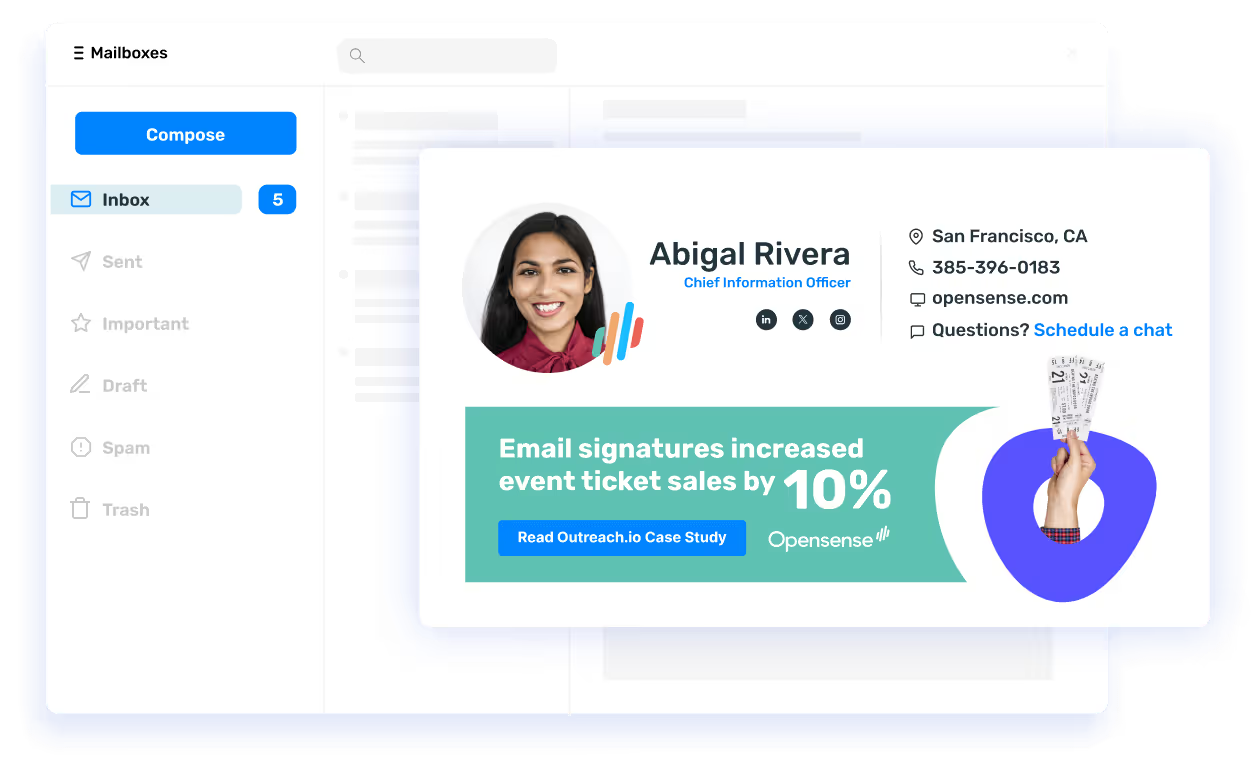
From beautiful email signatures and powerful ad campaigns to sales analytics and email compliance, Opensense can help you make the most of employee email.
Get demo